
Can creatine improve running performance?
Creatine Monohydrate
Creatine has become an increasingly popular topic in both the sports science world and athletic communities. More recently, it’s a question that we get asked about often. Several of our coaching team have been using creatine for several months now and therefore we wanted to share some information around creatine.
Thanks to a growing body of research, creatine is gaining recognition as a safe, effective, and versatile supplement for a variety of populations- not just body builders. While it’s traditionally been associated with muscle building, creatine is now being explored for its potential benefits in endurance performance, recovery, and cognitive function. For those questioning if creatine is a beneficial addition to their supplement routine, read on as we break down the basics, benefits, and common concerns.
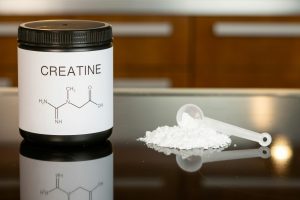
What is creatine?
Creatine is an amino acid naturally found in our body, made in the liver, pancreas, and kidneys and stored in skeletal muscle. We can also obtain creatine in small amounts through food like red meat and fish. It is one of the most widely researched and supported supplements for sports performance. There’s many different forms of creatine supplementation you may have heard of- micronized, hydrochloride, ethyl ester to name a few- and we can really get in the weeds when exploring the pros and cons of all. For the sake of simplicity, I’ll be referencing creatine monohydrate, which is the most widely used and researched of the bunch.
What does it do?
High concentrations of creatine are useful during short, intense bursts of activity because it delays the depletion of adenosine triphosphate (ATP), our body’s preferred energy source. This is why it’s so effective for power-based movements and recovery between efforts. It can support:
- Muscle size and strength
- Power output
- Recovery between training sessions
- Cognitive function
Who has traditionally used creatine?
Creatine has long been used by sprinters, weightlifters, and team sport athletes who rely on short bursts of effort. But as the sport science world shifts away from the outdated endurance athlete stereotype (lean, under-fueled, and minimalist), creatine is becoming more mainstream for runners looking to be strong, resilient, and well-fueled.
How is it useful for endurance runners
Creatine’s direct effects on endurance performance are still being researched, and results are mixed. Its ability to enhance anaerobic capacity and time to exhaustion (Forbes et al. 2023) could yield great benefits at the end of your race, sprinting to the finish to dip under a time goal. Enhanced muscle growth could provide some injury prevention benefits, improving balance, stability, and biomechanics (Kreider et al. 2017). Creatine may also boost glycogen storage (Roberts et al. 2016), a significant benefit for those training for marathons and ultras. Further, creatine supplementation can reduce inflammation and increase muscle repair– a great benefit for recovery (Smith-Ryan et al. 2021).
As far as cognitive benefits, creatine supplementation improves both acute and chronic stressors, like sleep deprivation or depression and aging. It is a great supplement for those who have recently suffered a concussion as well, easing symptoms like dizziness, headaches, and fatigue (Dolan, Gualano, and Rawson 2019).

When to take it? How much?
Creatine is best taken before or after exercise, and there is not much research to support a significant difference between the two. My recommendation is whatever works for you to stay consistent- whether that’s mixing it with electrolytes before your workout or with a protein shake afterwards. You can purchase it flavored or unflavored- just know it can be gritty, so shake well.
Loading vs Maintenance
There are many different approaches to dosing creatine. You’ll hear about a loading phase, which is when one consumes high amounts of creatine (around 20g/day) for a few days, then transitions to a maintenance phase (3-5g/day). The loading phase is typically recommended for athletes in strength-based sports (think weightlifting or football), those needing quick recovery after an injury, or vegetarians/ vegans who have lower baseline creatine concentrations.
A smaller, maintenance dose is typically used to avoid GI issues that come with creatine supplementation, as well as other side effects that might come with creatine supplementation, like water retention. Both the loading or maintenance approaches yield favorable end results that allow you to reap the benefits of creatine supplementation, the choice is up to the individual and their goals!
Is there a difference in how male or female athletes should use it?
Yes, and it’s important! Some studies suggest women naturally have 70-80% lower creatine stores than men. Therefore, women could see more of a benefit from creatine supplementation than male counterparts. A 2021 literature review on creatine for women concluded that “When combined with resistance training, creatine further augments body composition and bone mineral density, particularly in post-menopausal females (Ryan et. al).” For female runners, creatine can support long-term muscle and bone health, both of which are crucial for injury prevention and longevity in the sport.
Any drawbacks from using it or things we should be cautious of? Are there specific athletes who shouldn't take it?
There is no evidence of serious adverse effects of creatine supplementation; it is safe to take long term. The main two side effects, are GI distress and weight gain via water retention. GI distress is particularly noted if using a loading phase, and to ease GI symptoms it is recommended to take creatine with food, and avoid ingesting it alongside other supplements that cause GI issues (ie: fiber, any sodium bicarb users?). As for the water retention, creatine can cause a small weight gain in some athletes (1-2kg/ 2-4lb), that will stay around as long as creatine levels in the muscles remain high, (again, water, not fat).
Some studies have also shown that many athletes, especially those who participate in resistance training, showed no changes in water retention when using creatine (Andre et al. 2016). While it’s valid to feel a concern about a supplement causing you to gain weight, remember: performance is what matters, not a number.
Recommended brands
If creatine is a supplement you are interested in, here are a few things to look for in a brand: To start, opt for creatine monohydrate, it is the form of creatine with the most research behind it.
Look for a brand that has some of the following certifications: This ensures there aren’t any contaminants in the supplement, and are tested for both safety and quality- compared to random brands found on Amazon! Additionally you can search for your supplement and brand on one of these certified organizations such as this one for NSF.
Coach Mike uses Momentous Creatine Monohydrate (certified by NSF). We have no affiliation with this company, just sharing what Coach uses.

Creatine isn’t magic, but it is a well researched, low risk supplement that can give you a performance and recovery edge when paired with quality training, fueling, and rest. If you are a runner who is training hard, looking to finish stronger, and improve strength and resilience- creatine may be worth adding to your toolbox.
Article written by Sarah Watts and Mike McMillen
References:
Andre TL, Gann JJ, McKinley-Barnard SK, Willoughby DS. Effects of five weeks of resistance training and relatively-dosed creatine monohydrate supplementation on body composition and muscle strength and whole-body creatine metabolism in resistance-trained males. Int J Kinesiol Sports Sci. 2016;4:28–35.
Dolan E, Gualano B, Rawson ES. Beyond muscle: the effects of creatine supplementation on brain creatine, cognitive processing, and traumatic brain injury. Eur. J. Sport. Sci. 2019;19:1–14. doi: 10.1080/17461391.2018.1500644.
Forbes SC, Candow DG, Neto JHF, Kennedy MD, Forbes JL, Machado M, Bustillo E, Gomez-Lopez J, Zapata A, Antonio J. Creatine supplementation and endurance performance: surges and sprints to win the race. J Int Soc Sports Nutr. 2023 Dec;20(1):2204071. doi: 10.1080/15502783.2023.2204071. PMID: 37096381; PMCID: PMC10132248.
Kreider RB, Kalman DS, Antonio J, Ziegenfuss TN, Wildman R, Collins R, Candow DG, Kleiner SM, Almada AL, Lopez HL. International Society of Sports Nutrition position stand: safety and efficacy of creatine supplementation in exercise, sport, and medicine. J. Int. Soc. Sports Nutr. 2017;14:18-z. doi: 10.1186/s12970-017-0173-z.
Rawson ES, Stec MJ, Frederickson SJ, Miles MP. Low-dose creatine supplementation enhances fatigue resistance in the absence of weight gain. Nutrition. 2011 Apr;27(4):451-5. doi: 10.1016/j.nut.2010.04.001. Epub 2010 Jul 1. PMID: 20591625.
Roberts PA, Fox J, Peirce N, Jones SW, Casey A, Greenhaff PL. Creatine ingestion augments dietary carbohydrate mediated muscle glycogen supercompensation during the initial 24 h of recovery following prolonged exhaustive exercise in humans. Amino Acids. 2016 Aug;48(8):1831-42. doi: 10.1007/s00726-016-2252-x. Epub 2016 May 19. PMID: 27193231; PMCID: PMC4974290.
Smith-Ryan, A.E.; Cabre, H.E.; Eckerson, J.M.; Candow, D.G. Creatine Supplementation in Women’s Health: A Lifespan Perspective. Nutrients 2021, 13, 877